

Snapshot
- Role: Solo designer and developer
- Format: Single-player PC game prototype
- Genre: Puzzle-adventure
- Platform: Windows PC
- Engine: Unreal Engine 5.6
- Focus: Gameplay progression, environmental storytelling, player guidance, and engagement loops
- Deliverables: Playable PC build, game environment, progression system, interaction mechanics, and gameplay sequence
- Status: Working prototype under consideration for further development and potential Steam release
Role Tracks
- Primary: Game design and emerging-media development
- Secondary: Learning experience design and gamification
- Also relevant to: Unreal Engine prototyping, environmental storytelling, interaction design, and user experience
Project Disclosure
This was an independently developed personal game project. It was created as a working prototype to explore interactive storytelling and the design of gameplay systems that help players learn through action.
Context
Games rarely teach players effectively by explaining every rule in advance. Strong gameplay lets players discover what matters through environmental clues, safe experimentation, immediate feedback, and increasingly difficult challenges.
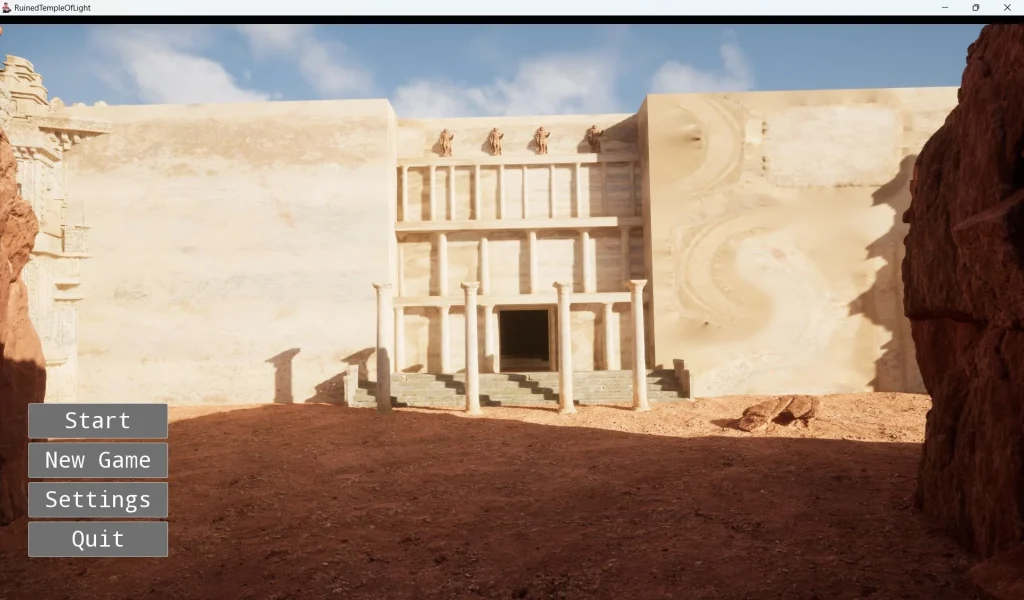
I created The Ruined Temple of Light to explore that design problem inside a narrative environment. The player enters a ruined temple and must learn how to move through its spaces, interpret visual guidance, overcome obstacles, and progress toward the temple’s central objective.
The design challenge was not simply to build an attractive environment. It was to make the environment communicate.
The Design Problem
A playable environment needs to guide the player without making the experience feel like a tutorial.
Several questions shaped the project:
- How can the environment show the player where to go?
- How can a new mechanic be introduced without interrupting play?
- How should challenge increase as the player becomes more capable?
- What feedback helps players understand that an action worked?
- How can rewards encourage continued exploration?
- How can the game communicate story and purpose without excessive exposition?
These questions connect game design with learning design. In both fields, people need a clear goal, an opportunity to act, meaningful feedback, and a challenge calibrated to their growing ability.
Project Goals
- Build a coherent, playable game experience in Unreal Engine.
- Teach essential interactions through play rather than lengthy written instructions.
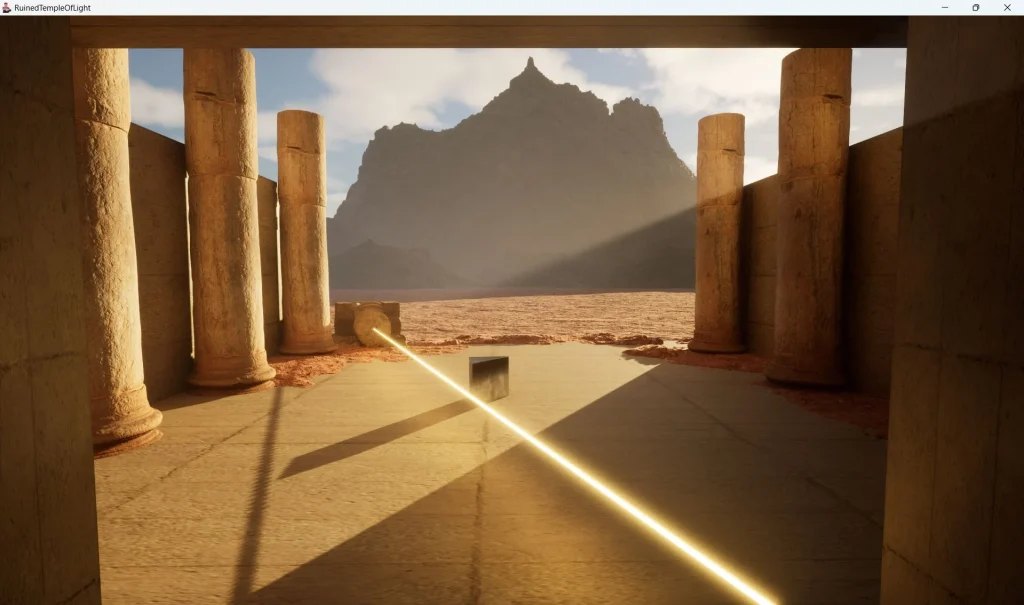
- Use visual and environmental cues to guide player attention.
- Create a progression curve that moves from introduction to application and increased difficulty.
- Reinforce successful actions through visible feedback and rewards.
- Use the temple environment to support atmosphere, curiosity, and narrative meaning.
- Produce a PC build that could serve as the foundation for a larger game.
Constraints
As a solo prototype, the project required careful decisions about scope.
- The core gameplay loop needed to work before expanding the environment.
- Mechanics had to be understandable without a complex tutorial system.
- Art, lighting, interaction, progression, and technical implementation had to be developed within a manageable production scope.
- The experience needed to run as a standalone PC build.
- The prototype had to demonstrate a complete idea even if it did not yet contain the content expected from a commercial game.
These constraints led me to prioritize a coherent player journey over a larger collection of disconnected features.
What I Designed and Built
1. Established the Player Journey
I structured the experience around movement through a ruined temple, with each area contributing to the player’s understanding of the world and its mechanics.
Rather than presenting every challenge immediately, the game introduces the player to its interaction language gradually. Early sections provide space to observe and experiment. Later sections require the player to apply what they have learned under more demanding conditions.
This creates a simple progression:
- Notice a visual or environmental cue.
- Experiment with an action.
- Receive feedback.
- Understand the underlying rule.
- Apply that rule in a more difficult situation.
2. Used Progressive Difficulty
The game’s challenges were arranged to build on one another.
The early experience establishes the basic controls and expectations. Subsequent encounters introduce additional complexity, reduce obvious guidance, or require the player to combine previously learned actions.
The aim was to avoid two common design problems:
- giving the player a difficult challenge before they understand the system;
- repeating the same challenge after the player has already mastered it.
Progressive difficulty allows the game to remain accessible at the beginning while still producing a sense of growth and accomplishment.
3. Designed Non-Verbal Player Guidance
I used the environment to direct player attention and communicate possible actions.
Relevant design elements included:
- lighting and contrast;
- architectural framing;
- object placement;
- spatial composition;
- visible destinations;
- repeated environmental patterns;
- changes in color or visual emphasis;
- feedback following a successful interaction.
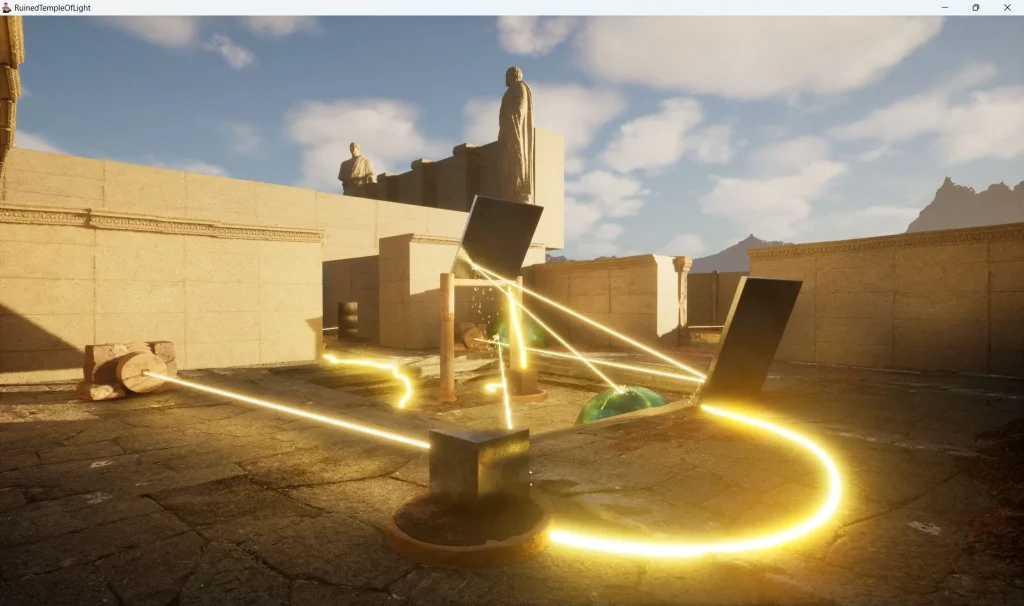
These cues reduce the need for intrusive instructions. The player is guided, but still experiences the satisfaction of discovering the route or solution.
4. Built Reinforcement and Feedback Loops
For a player to learn from an action, the game must make the result understandable.
I designed feedback around a recurring loop:
- The environment presents an objective or obstacle.
- The player attempts an action.
- The game signals whether the action succeeded.
- Progress or another form of reinforcement follows.
- The next challenge asks the player to use the same understanding in a new way.
This loop helps maintain engagement because player actions produce visible consequences. It also supports learning: successful behavior is recognized and becomes easier to repeat.
5. Connected Mechanics With Environment and Story
The temple was designed as more than a backdrop. Its ruined spaces, light, architecture, obstacles, and progression contribute to the meaning of the experience.
The player is not simply moving across a sequence of unrelated levels. Each section should feel like part of the same place and the same unfolding journey.
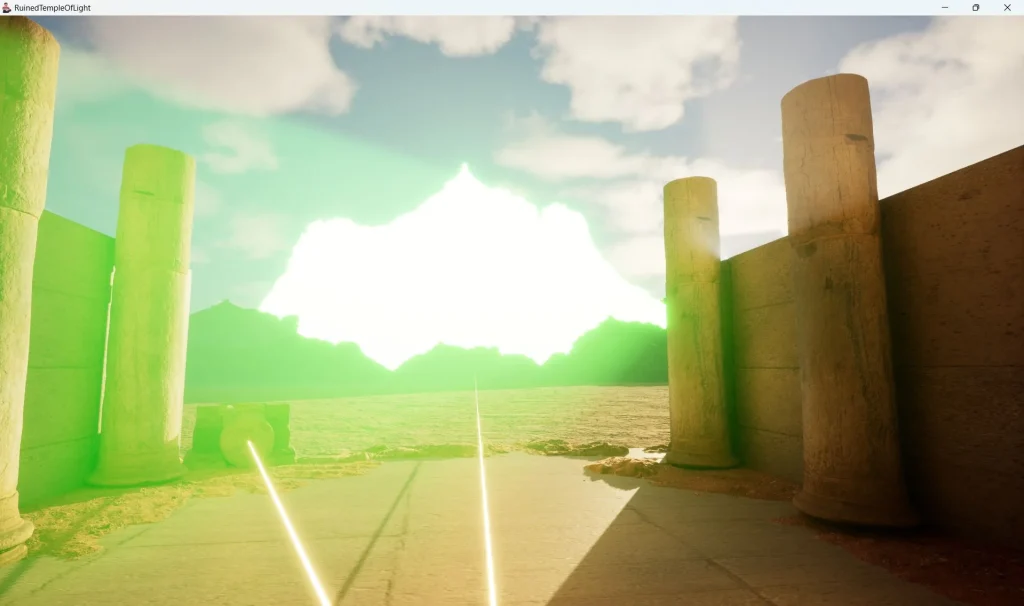
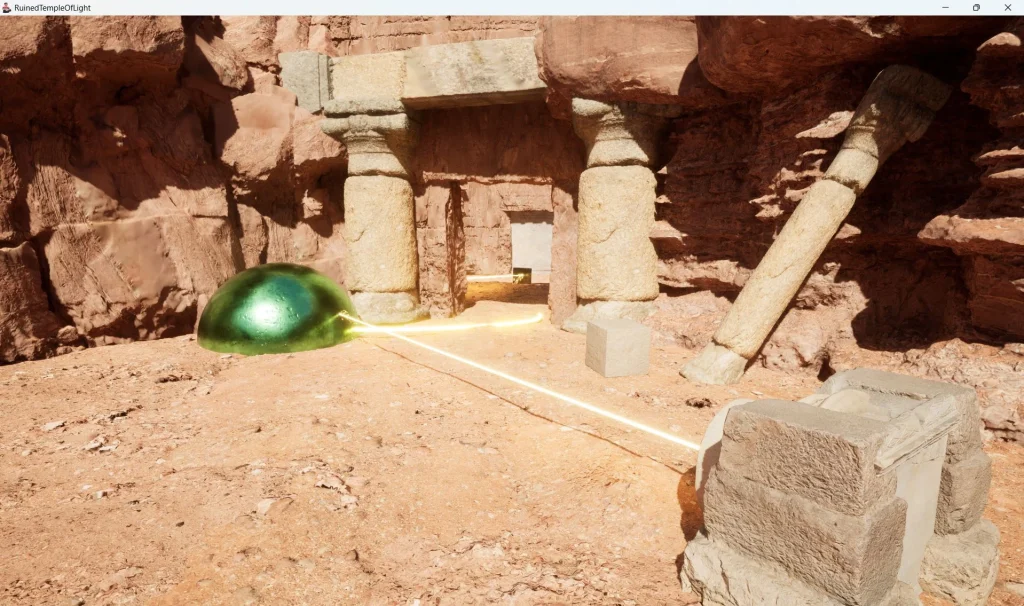
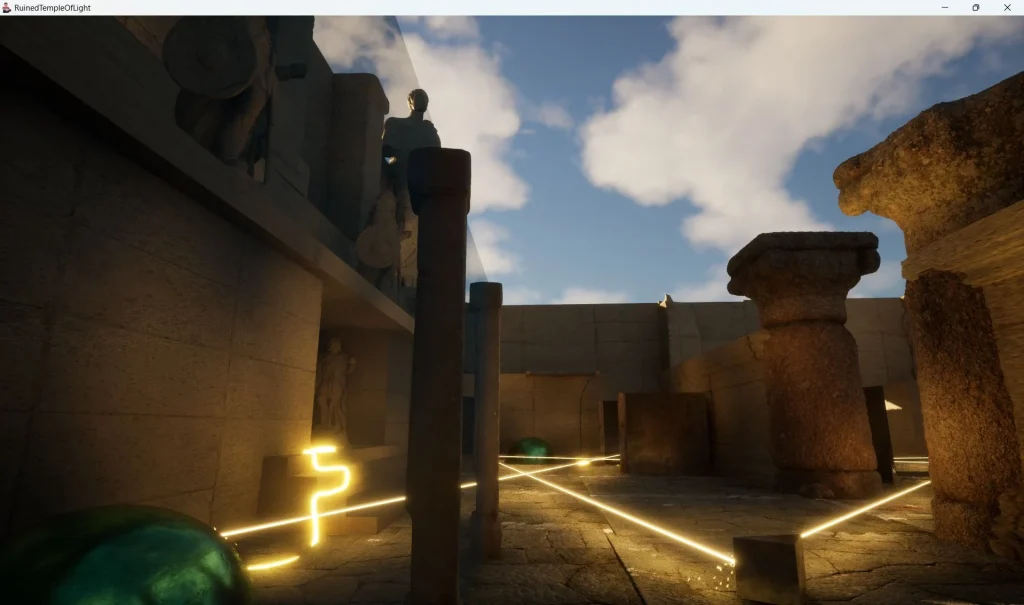
They are an explorer who becomes trapped within an ancient ruined Temple of Light while searching for its forgotten secrets. The light rays are remnants of sacred energy that once powered the temple, and the player must align them to unlock sealed gates and progress deeper. As the player escapes, the temple is restored and turns green, symbolizing renewal and the return of life to a place long abandoned.
This approach allowed me to explore environmental storytelling: communicating through spaces, objects, atmosphere, and player action rather than relying only on dialogue or cutscenes.
6. Prototyped the Experience in Unreal Engine
I used Unreal Engine to assemble the environment, implement interactions, structure gameplay progression, and produce a playable Windows build.
The development process required work across several connected areas:
- level and environment design;
- gameplay logic;
- interaction design;
- collision and navigation;
- lighting and atmosphere;
- visual feedback;
- challenge sequencing;
- build preparation and testing.
Building the prototype helped me understand how creative intent, player experience, and technical implementation influence one another. A promising idea still needs clear logic, reliable feedback, and careful sequencing before it becomes playable.
Key Design Decisions
Teach Through Action
The game introduces mechanics in situations where the player can safely experiment before those mechanics become necessary for progression.
Make Guidance Part of the World
Visual direction is embedded in lighting, composition, architecture, and object placement instead of being separated from the experience.
Increase Difficulty Through Application
Later challenges build on knowledge introduced earlier. Difficulty comes from applying and combining learned behavior, not merely from making the same task slower or more frustrating.
Reward Understanding
Progress functions as reinforcement. When the player correctly interprets the environment or uses a mechanic, the game responds in a way that makes the relationship between action and consequence clear.
Build the Complete Loop First
For the prototype, completing a coherent beginning-to-end experience was more valuable than adding many unfinished mechanics.
Prototype Outcomes
The project produced:
- a working standalone PC game prototype;
- a structured gameplay progression;
- an environment that uses non-verbal cues to guide attention;
- a challenge sequence based on progressive difficulty;
- reinforcement loops connecting action, feedback, and progress;
- a practical demonstration of how learning-design principles can strengthen game experiences;
- a technical and creative foundation that could be expanded into a larger release.
The project has not yet undergone a formal public playtest, so I am not presenting player-retention or usability claims. A future testing phase would examine where players hesitate, which cues they notice, where difficulty changes too sharply, and whether the intended emotional journey comes through during play.
What the Project Taught Me
Players Need Clarity Without Losing Agency
Too much instruction can make an experience feel mechanical. Too little guidance creates confusion. The design challenge is to provide enough information for meaningful action while allowing discovery to belong to the player.
Feedback Is Part of the Mechanic
An interaction is not complete simply because the underlying code works. Players need to see, hear, or otherwise understand what changed and why.
Level Design Can Function as Instruction
The order and arrangement of spaces can teach. A level can introduce a concept, provide practice, test understanding, and then invite the player to transfer that knowledge to a new situation.
Scope Is a Design Tool
Limiting the prototype helped me focus on the essential player experience. Scope decisions were not merely production compromises; they clarified which mechanics and moments were central to the project.
Game Design and Learning Design Share a Common Structure
Both fields depend on goals, action, feedback, appropriately difficult challenges, reinforcement, and opportunities to apply prior learning. This project helped me explore those connections through a playable experience rather than only as theory.
Proof
Gameplay video: (To be added)
Playable build: (To be added)
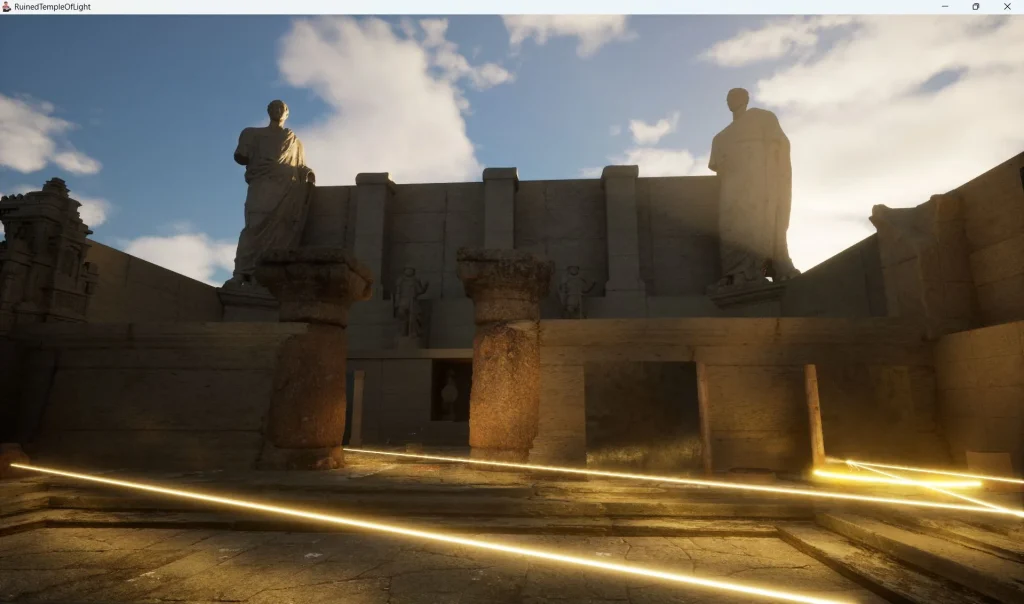
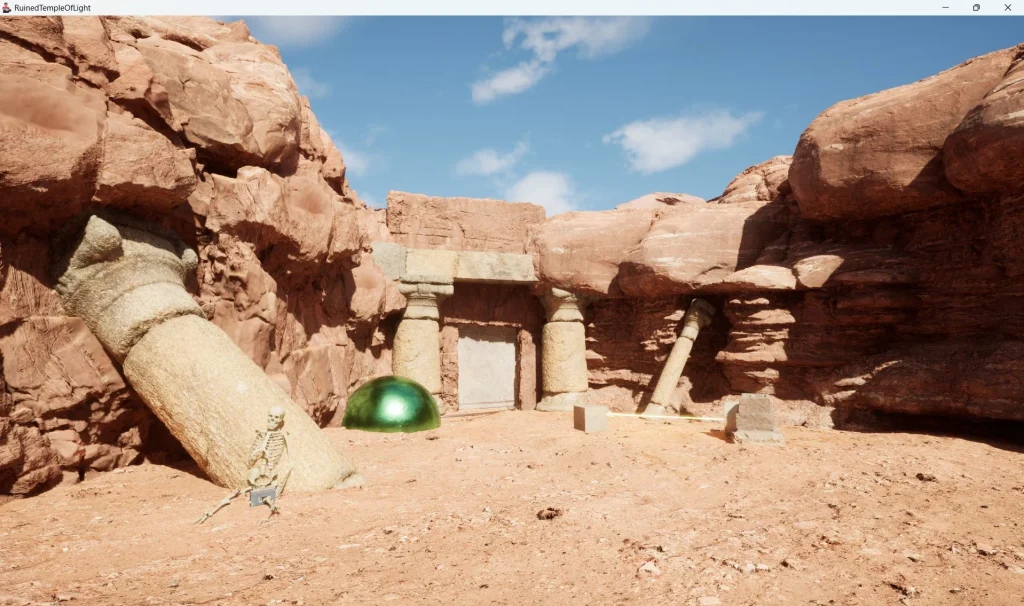
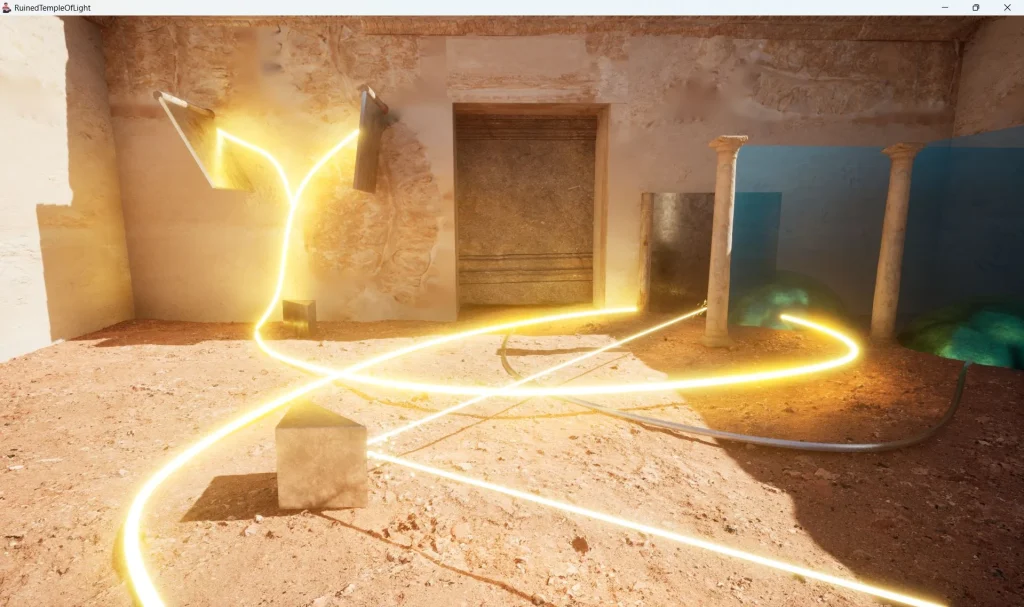
Project gallery:
Skills Demonstrated
Game design, level design, environmental storytelling, gamification, player onboarding, non-verbal instruction, progressive difficulty, interaction design, reinforcement loops, Unreal Engine prototyping, gameplay logic, visual communication, rapid iteration, and standalone PC development.
Tools
Unreal Engine 5.6, using free assets from FAB. Audio was recorded from my trainer who taught me how to create the game. No character creation as it is a first-person game. Animation includes picking up cubic rocks and triangular metal objects to navigate the lights.
What I Would Develop Next
If I take The Ruined Temple of Light toward a commercial release, the next development phase would focus on:
- conducting structured playtests with new players;
- observing where navigation or mechanics become unclear;
- refining the difficulty curve using playtest evidence;
- strengthening the game’s story and player motivation;
- improving animation, sound, feedback, and environmental polish;
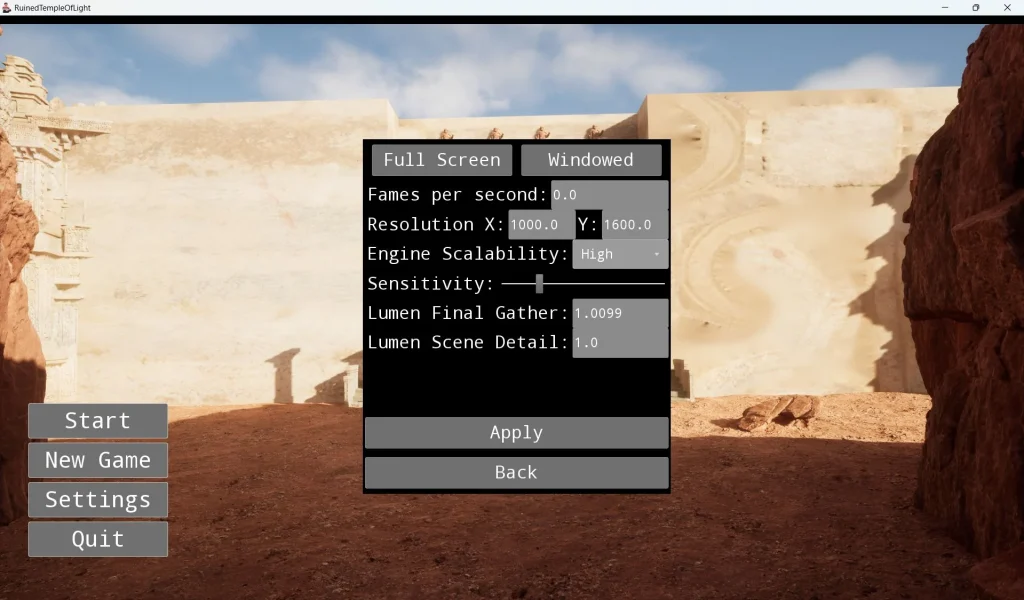
- adding accessibility and graphics settings;
- optimizing performance across different PC configurations;
- creating save, pause, settings, and checkpoint systems as needed;
- preparing a Steam store page, trailer, capsule artwork, and release build;
- defining whether the project should become a short premium experience or a larger game.
The most important next step is not automatically adding more content. It is testing whether the current experience communicates clearly and delivers the intended sense of discovery, challenge, and progression.
Why This Project Matters to My Work
The Ruined Temple of Light demonstrates my ability to connect narrative, interaction, technology, and human learning.
Although it is a game, the underlying design questions apply more broadly to learning technology and digital adoption:
- How do people understand what to do?
- What helps them move from observation to action?
- How should difficulty increase?
- What feedback encourages useful behavior?
- How can an environment teach without overwhelming the user?
The project gave me a practical space to answer those questions through gameplay—and to build the resulting experience in Unreal Engine.
Other Case Studies
- AI Strategy Lab VR: Voice-First Executive Simulation
- AI Characters That Stay on Story Rails
- Digital Adoption and Learning Technology Projects
Let’s Talk
If you are developing a game, immersive learning experience, interactive simulation, or Unreal Engine prototype, I would be glad to discuss the experience you want to create and the systems needed to make it work. Get in touch.