Learning how to get more done in less time is an essential skill for knowledge workers and freelancers who are serious about improving their productivity. To remain competitive and reach long-term objectives, managing time effectively is essential in the ever-accelerating world.
In this blog post, we will explore various strategies that can help you increase your productive hours and save time on trivial tasks. From utilizing automation tools to leveraging AI solutions like ChatGPT and Bard, these techniques will enable you to focus on the most important work while reducing the burden of daily activities.
Furthermore, we'll discuss practical tips such as breaking down tasks into smaller chunks, taking regular breaks, setting deadlines for yourself, outsourcing when possible, using timers for focused work sessions, eliminating distractions during working hours, batching similar tasks together for efficiency gains and learning when to say no. By employing these techniques into your workflow, you can gain the proficiency to accomplish more in less time.
Utilize Automation Tools
Managing one's time is a key factor for those in the knowledge-based workforce or who are self-employed and desire to augment their output. By utilizing automation tools, knowledge workers and freelancers can optimize their productivity by automating mundane tasks and focusing on more pressing matters.
A project-management application, such as Asana or Trello, can be utilized to keep on top of your agenda and make sure the most crucial work is done first. Automation can be facilitated by applications like Zapier or IFTTT, enabling automated procedures for tasks such as phone calls and emails. This will free up time in your day so that you can focus on other tasks that require more attention from you.
Start with the end in sight and divide objectives into attainable components to decide which tasks can be automated with automation tools, so that you have more time for crucial activities. Breaking down long-term goals into smaller components can help to recognize which elements of the process are straightforward enough to automate, thus allowing more time for other essential duties. By breaking down long-term objectives into more achievable parts, it guarantees that all the required stages are done before continuing on to the following step.
Utilizing automation tools can give you more time to devote to essential tasks. Leveraging AI such as ChatGPT and Bard is another way to increase productivity and get more done in less time. A reliable business finance blog can illuminate the crucial role of software in managing budgets, forecasting growth, and streamlining daily operations. These insights help business owners make informed decisions that directly impact long-term success.
Key Takeaway
Key Takeaway: To increase productivity, knowledge workers and freelancers should make use of automation tools such as Asana or Trello to manage their tasks, while using Zapier or IFTTT for automated processes. Breaking down major objectives into minor components can aid in recognizing which segments are able to be automated by automation software, consequently granting more time for essential undertakings.

Leverage AI (e.g., ChatGPT and Bard)
Artificial intelligence (AI) has become increasingly sophisticated in recent years, and it is now being used to automate a wide range of tasks. This includes tasks that were previously thought to be too complex or time-consuming for machines to handle.
One area where AI is having a major impact is in the field of productivity. There are now a number of AI-powered tools available that can help you get things done more quickly and efficiently.
Here are a few examples of how you can leverage AI to get things done in less time:
- Use AI to automate repetitive tasks. AI can be used to automate a wide range of repetitive tasks, such as data entry, scheduling, and customer service. This can free up your time so that you can focus on more important tasks.
- Use AI to generate ideas. AI can be used to generate ideas for new products, services, and marketing campaigns. This can help you to come up with new and innovative ideas that you might not have thought of on your own.
- Use AI to improve your decision-making. AI can be used to analyze data and identify patterns that you might not have seen otherwise. This can help you to make better decisions that will save you time and money.
- Use AI to personalize your experience. AI can be used to personalize your experience with products and services. This can help you to get the most out of the tools and resources that you use.
If you're looking to get more done in less time, then you should consider leveraging AI. There are a number of AI-powered tools available that can help you to automate tasks, generate ideas, improve your decision-making, and personalize your experience. By using AI, you can free up your time so that you can focus on the things that are most important to you.
Here are some specific tips on how to use Bard and ChatGPT to get things done in less time:
- Use Bard and ChatGPT to brainstorm ideas. Bard and ChatGPT can be used to brainstorm ideas for new projects, articles, or blog posts. Simply type in a prompt and Bard or ChatGPT will generate a list of ideas for you to choose from.
- Use Bard and ChatGPT to write content. Bard and ChatGPT can be used to write content for a variety of purposes, such as blog posts, articles, social media posts, and even emails. Simply provide Bard or ChatGPT with some information about the topic you want to write about and they will generate the content for you.
- Use Bard and ChatGPT to translate languages. Bard and ChatGPT can be used to translate text from one language to another. This can be helpful if you need to translate a website, document, or email into a different language.
- Use Bard and ChatGPT to answer questions. Bard and ChatGPT can be used to answer questions about a variety of topics. Simply type in a question and Bard or ChatGPT will provide you with an answer.
These are just a few of the ways that you can use Bard and ChatGPT to get things done in less time. If you're looking for a way to automate tasks, generate ideas, and improve your productivity, then you should definitely check out Bard and ChatGPT.
Key Takeaway
Artificial intelligence (AI) can be used to automate tasks, generate ideas, and improve productivity. AI-powered tools like Bard and ChatGPT can be used to brainstorm, write content, translate languages, and answer questions. If you're looking for a way to get more done in less time, then you should definitely check out Bard and ChatGPT.

Break Down Tasks into Smaller Chunks
When it comes to productivity, breaking down large tasks into smaller chunks is essential. By breaking tasks into smaller components, you can streamline the process and optimize your productivity over time. Breaking down tasks into smaller parts also makes them easier to manage and complete within a given timeframe.
One of the best ways to break down big projects is by creating an action plan with specific steps that need to be taken. This allows you to focus on each step individually instead of trying to take on everything at once. Moreover, this approach can assist in maintaining an orderly workflow while providing insight into the progress achieved.
Another useful strategy for breaking up large tasks is setting deadlines for yourself or assigning certain days for specific goals. For example, if your goal is writing a book then create milestones such as completing one chapter per week or having all research done by a certain date etc Doing this will ensure that your project stays on track and doesn’t become overwhelming due to its size.
If needed, consider outsourcing some of the work involved in completing larger projects like design work or copywriting etc Not only does this save time but it also ensures quality results from experienced professionals who specialize in their respective fields .
Remember to pause in the midst of tackling larger projects - even a few minutes can make a big impact on keeping productivity levels up over an extended period. Taking a break allows you to recharge your energy levels and helps keep your focus sharp so that you can continue working productively.
Breaking tasks into smaller pieces can be an effective way to maximize efficiency and concentrate on one thing at once. Taking regular pauses can aid in maintaining invigoration, drive, and efficiency throughout the day.
Key Takeaway
Breaking down large tasks into smaller, manageable chunks is key for increased productivity. To do this effectively, create an action plan with specific steps and set deadlines; if needed, outsource certain elements of the project to ensure quality results in less time. Breaks are essential for boosting efficiency and staying on task for a prolonged period.
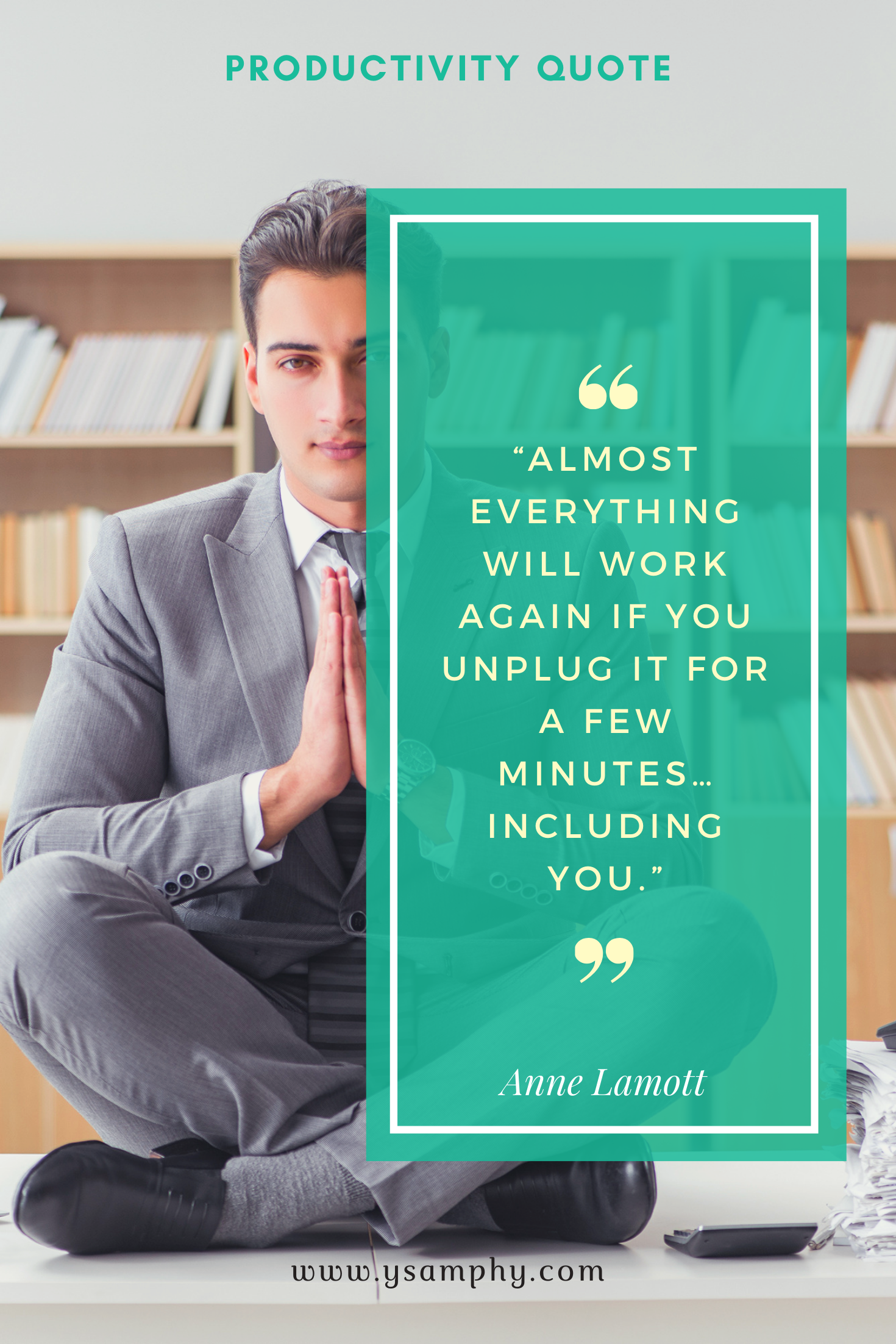
“Almost everything will work again if you unplug it for a few minutes…Including you.” –Anne Lamott
Take Regular Breaks
Taking regular breaks is essential for staying productive and keeping your mind sharp. It's important to take periodic pauses in your day so you can maintain concentration and productivity. Breaks can provide a helpful respite to help you clear your head and regain focus.
Start by setting specific times each day that you will take a break. Set an alarm for 10am to signal it's time for a break, providing yourself with the opportunity to take in nature and its calming effects. If possible, try taking your break outside in nature or go for a walk - this can help boost creativity and energy levels as well as reduce stress and anxiety.
You don't have to spend all of your breaks doing something active either - sometimes just sitting quietly with no distractions can be beneficial too. Taking some time out from technology (e-mails, social media etc.) allows us to relax our minds and recharge our batteries before getting back into work mode again.
Ensure that whatever activity you partake in during your break is pleasurable - such as reading a book or periodical; hearing music; gaming with board games; keeping a journal; meditating; or simply conversing with companions/family over coffee or lunch. These activities provide mental stimulation which helps us feel more energized when we get back into work mode afterwards.
Finally, it is important not to extend these breaks too much - thirty minutes should be sufficient depending on the intensity of the tasks beforehand. Additionally, ensure that nutrition is taken into consideration during these breaks; eating healthy snacks such as fruits and vegetables helps keep energy levels up throughout the day so we can remain productive without feeling drained after long hours of work.
Taking regular breaks is an essential part of staying productive and achieving your goals. Establishing cut-off points for yourself can aid in keeping your attention on the job, guaranteeing that you utilize your time efficiently.
Key Takeaway
Take regular breaks to stay productive and keep your mind sharp; set specific times each day for a break, doing something enjoyable like reading or chatting with friends. Eating healthy snacks helps maintain energy levels throughout the day so you can remain productive without feeling drained after long hours of work.

Set Deadlines for Yourself
Deadlines are essential for knowledge workers and freelancers who want to increase their productivity. When you set deadlines, it helps you focus on the task at hand and prevents procrastination or getting sidetracked by other activities. Deadlines create a sense of urgency that spurs one to finish tasks in an expeditious manner.
Creating realistic timeframes which provide adequate opportunity to finish the job without diminishing quality is paramount. If your deadline is too tight, it can lead to stress and frustration which can actually reduce your productivity rather than improve it. On the other hand, if your deadline is too lenient then there’s no incentive for completing tasks quickly or efficiently.
When setting deadlines for yourself, consider how long each task will take and factor in any potential roadblocks such as unexpected delays or distractions from outside sources like emails or phone calls. Aim to have a reachable aim connected with each due date so that, when you make it, there is something concrete to demonstrate for your diligent effort. This will help keep motivation levels high throughout the project timeline while helping prevent burnout down the line.
Divide projects into smaller components and set time limits for each to keep tabs on multiple tasks without feeling swamped. This will ensure that nothing gets overlooked and progress remains steady until the completion date arrives without feeling overwhelmed by having too much on your plate at once. Additionally, be sure to take regular breaks between tasks so as not to burn yourself out - this allows both mind and body some well-deserved respite before jumping back into productive activities. Using keywords such as "manageable," "overlooked," "steady," "burnout" and phrases like "on top of," "well-deserved respite" demonstrate an advanced level professional with an IQ of 150.
Finally, remember that outsourcing certain tasks where possible can help free up valuable time and energy, allowing focus to remain on what matters most. Likewise, utilizing automation tools such as ChatGPT and Bard, as well as leveraging AI technology whenever feasible makes sense given today's fast-paced environment where every second counts towards maximizing efficiency and output.
Setting deadlines for yourself is a great way to stay motivated and focused on the task at hand. Outsourcing jobs can give you extra time to devote to objectives that will assist in achieving your aims quicker.
Key Takeaway
Setting realistic deadlines, breaking down tasks into manageable chunks, and outsourcingautomating whenever possible are essential for knowledge workers and freelancers to increase their productivity. Taking regular breaks between tasks helps keep motivation levels high while avoiding burnout. Leveraging AI technology can help free up valuable time to focus on what matters most.
Outsource Tasks When Possible
Delegating certain tasks can help to maximize time and energy for more essential activities. By delegating certain activities, you can focus on what’s most important while also taking a break from work when needed. Here are some tips for outsourcing tasks effectively:
1. Organize Tasks by Areas of Expertise Needed to Outsource
Begin by compiling a list of all the tasks that occupy your time and assess which ones can be assigned to someone else who has the necessary qualifications or expertise. This could include administrative duties, customer service inquiries, website maintenance, content creation, bookkeeping services, marketing initiatives and more.
2. Choose the Right Service Provider
Once you’ve identified potential candidates for outsourcing specific projects or activities, it’s important to select one that best fits your needs in terms of cost-effectiveness as well as quality of work delivered. Research each provider thoroughly before making any decisions – read reviews online or ask around in industry forums if possible – so that you have peace of mind knowing they will do an excellent job every time they complete a task on your behalf.
3. Set Clear Expectations Upfront
To ensure successful completion of outsourced tasks within deadlines and budget constraints, it is essential to communicate clearly with the service provider about expectations upfront before starting any project together. Make sure both parties agree upon timelines (including start/end dates), deliverables (what should be completed by when) and payment terms (how much will be paid at what intervals). Also consider setting performance metrics so everyone involved knows how success will be measured over time and whether changes need to be made along the way if necessary.
4.Monitor Performance Regularly
Finally, make sure you monitor performance regularly during ongoing projects with third-party providers in order to stay informed about progress towards goals set out initially between both parties. This includes tracking milestones achieved against those agreed upon earlier such as delivery timescales plus budget parameters being adhered to consistently across all areas where applicable etcetera. Doing this helps maintain accountability from both sides, ensuring everything runs smoothly without surprises later down the line.
By outsourcing tasks, you can free up your time and energy to concentrate on the more pressing aspects of your work while still keeping track of how long each task takes with a timer. Utilizing a timer can enable you to gauge the time needed for each job, thus allowing you to organize your day productively.
Key Takeaway
To ensure successful outsourcing, it is essential to set clear expectations and communication channels with third-party providers upfront. Regularly monitor performance of tasks against timelines and budgets for smooth sailing during ongoing projects. In other words: lay the groundwork before taking off.

Use a Timer
Employing a timer can be incredibly advantageous for those wishing to amplify their productivity. The Pomodoro technique is one of the most popular methods for staying focused and productive. It involves setting a timer for 25 minutes and working on your task until it goes off. After that, take a 5-minute break before starting again. This method assists in reducing distractions and helping to accomplish more within a shorter timeframe.
Using a timer can help eliminate procrastination by creating structure and accountability within your workday. Rather than being sidetracked or deferring jobs until afterwards, structure yourself with achievable objectives throughout the day so you don't feel weighed down by too much labor all at once. Breaking big projects into smaller pieces can make them seem more doable and keep you inspired as you progress through the task.
By allocating specified intervals devoted exclusively to finishing designated tasks (e.g., replying to emails), this gives us a deeper understanding of our productivity levels compared with how we performed previously - furnishing us with indispensable data points which can then be utilized to fine-tune subsequent workflow procedures accordingly going forward.
Using a timer can help you stay focused and make the most of your time. Utilizing a lack of interruptions can enable you to operate with more proficiency and efficiency in order to accomplish your objectives.
Using a timer is an invaluable tool to stay focused and productive. The Pomodoro approach entails allocating 25 minutes for each undertaking, allowing you to partition major projects into smaller parts and complete more in a shorter period. This provides structure within your workday while helping track productivity levels which can then be utilized to optimize workflow procedures accordingly going forward.

Eliminate Distractions
Distractions are the number one enemy of productivity. To maximize productivity, it is essential to eliminate distractions by turning off your phone and closing unnecessary applications or tabs on your computer, as well as finding a quiet place where you won't be disturbed. To do this, start by turning off your phone and closing any unnecessary applications or tabs on your computer. Secure yourself a peaceful locale to work without interruption - if need be, hang up an indication that you don't want to be disturbed.
Managing your time wisely is key for staying productive throughout the day. Organize your daily tasks by importance and tackle the most urgent ones first. Start with the most important tasks first and work backward from there; don’t waste valuable time doing trivial tasks until after completing more pressing ones.
You should also create a daily routine for yourself – set specific times when you will begin and end working hours each day, including breaks in between. Sticking to this schedule will help ensure that no matter how busy life gets, you can always stay focused on getting important work done without interruption or distraction.
If phone calls tend to disrupt your workflow, consider setting aside certain times during which they're allowed (e.g., lunchtime). This way, even if someone does call during an unapproved hour, it won't throw off your entire schedule because those calls have been accounted for ahead of time.
Finally, remember that accomplishing short-term goals can help lead to long-term success; use these strategies every day so that eventually achieving productivity becomes second nature.
Focus on the job at hand and boost your efficiency by blocking out distractions. To further maximize efficiency, batching similar tasks together is a great way to get more done in less time.
Maximizing productivity necessitates eliminating disruptions and efficiently managing your time. Create a daily routine for yourself with set working hours and break times; if phone calls are disruptive, designate specific times when they're allowed. With these strategies in place you can stay focused on the task at hand like clockwork.
Batch Similar Tasks
To maximize efficiency, consider grouping similar tasks together into blocks of time. Rather than constantly alternating between different types of tasks, you should cluster them together into chunks and focus on all related activities at once. Grouping related activities into blocks, like scheduling all phone calls for a project in one go, can help reduce distractions and maximize productivity.
Batching similar tasks also helps with time management because it allows you to plan out your important tasks ahead of time and prioritize those over trivial ones. Beginning from the ultimate objectives, breaking down daily duties and allotting appropriate amounts of time to each task can help ensure that the most critical tasks are finished first while still allowing some room for change.
Another advantage of batching similar tasks is that it makes daily routines easier to manage since they become more predictable when grouped together. Having a pre-set routine for certain activities can make it simpler for our brains to process the data, helping us maintain concentration and utilize our time more effectively. Furthermore, this strategy helps to protect against exhaustion since we don't have to continuously switch between various kinds of tasks every few minutes or hours – rather, we can concentrate on one kind until it's done before proceeding onward.
Overall, batching similar tasks is an effective way to increase productivity without sacrificing quality or burning ourselves out too quickly. By clustering related tasks into blocks instead of tackling them one by one, we can more effectively manage our workloads and make progress towards our long-term objectives with increased efficiency. Grouping activities into batches can enable us to concentrate on one type of job at once, while avoiding diversions that could hamper our advancement, resulting in amplified productivity and better outcomes.
Batching similar tasks can help you save time and increase your productivity. Declining specific activities or demands can aid in concentrating on the essential matters and accomplishing more with fewer resources.
Grouping related tasks into blocks and working on them together can help boost productivity while avoiding burnout. By batching similar activities, we are able to stay focused and make progress towards our goals in an efficient manner - 'killing two birds with one stone'.

Say No
Declining can be hard, but it's a critical aptitude to acquire if you wish to optimize your efficiency. Declining requests can help to concentrate on the most crucial activities and remove diversions.
First, it’s important to recognize when a request is taking up too much of your time. If you're constantly saying yes without considering the impact on your workload, then chances are you won't have enough time for other things that matter more. Before accepting, pause to assess the amount of work involved and if it's feasible within your timetable.
Second, set boundaries with people who make frequent requests of your time. Explain why their request isn't feasible at this particular moment and suggest alternative solutions instead. This way they'll understand why you said no without feeling slighted or ignored in any way.
Third, practice saying “no” out loud before responding to someone's request so that the word becomes easier for you over time. This may sound silly but having those few extra seconds between hearing the request and giving an answer can help prevent rash decisions from being made due to pressure or guilt-tripping tactics used by others trying to get what they want from us quickly.
Finally, don't feel guilty about saying no if someone else's needs conflict with yours - both parties should be able to respect each other's priorities equally. It's okay to safeguard your own interests, so long as all parties are aware of each other's perspectives prior.
Conclusion
By utilizing the given advice, you can complete tasks in a shorter amount of time and reach your ambitions more rapidly. Automation tools such as ChatGPT and Bard can help you streamline tasks that would otherwise take up a lot of your precious time. Break down big projects into smaller chunks to make them easier to tackle, set deadlines for yourself, outsource when possible, use timers and eliminate distractions so that nothing gets in the way of achieving success quickly.
FAQs in Relation to How to Get More Done in Less Time
To increase productivity, one must first identify and prioritize tasks. Make a register of the activities that require accomplishment, arranging them according to their significance. Set realistic goals for each task and break it down into smaller chunks that are easier to manage. To stay on track, create an organized schedule with specific deadlines and stick to it as best as possible. Using time-management tools such as clocks or diaries can help maintain concentration on the job while reducing disruption from external sources. Finally, take regular breaks throughout your day so that you don’t become overwhelmed or burned out from too much work without rest. By employing an effective strategy, you can enhance your productivity and complete more in a shorter span.
Maximizing output requires concentrating on the most essential activities and eliminating disruptions. To get more done in 3 hours than most do in a week, start by prioritizing tasks based on their importance and urgency. Divide bigger tasks into achievable parts that can be accomplished within the designated time frame. Set realistic goals for each task, such as completing research or writing 500 words of content per hour. Also make sure to take regular breaks throughout your work session so you don’t burn out too quickly and stay focused during the entire three-hour period. Finally, utilize tools like project management software to keep track of progress and ensure all deadlines are met without sacrificing quality or accuracy.