Every penny counts in the world of small business. Unfortunately, scammers are oblivious of this fact and often target small businesses with deceptive schemes designed to drain resources and disrupt operations. From phishing scams to fake invoices, these threats can come in many forms. To protect your business, it is crucial to stay informed and vigilant. Here are 11 common scams that you should watch out for while running your small business:
1. Phishing Scams
Phishing emails are designed to trick recipients into providing sensitive information, such as login credentials or financial details. These emails are often disguised as communication from legitimate sources, such as banks or vendors, but you should not be swayed that easily! As a small business owner, you should train your employees to recognize phishing attempts and avoid clicking on suspicious links or attachments. If you receive an email but cannot authenticate the source, run the email address on Nuwber to verify the identity of the owner as well as other details about them.
2. Fake Invoice Scams
Scammers leverage this tactic by sending fake invoices for goods or services that were never ordered or received. These invoices often appear to be from legitimate vendors or suppliers. How unfortunate would it be to pay for goods/services not rendered? As a small business owner, always review all invoices and verify the sender’s identity before making any payments.
3. Tech Support Scams
Tech support scammers often cold-call businesses claiming to be from a reputable tech company. They may try to convince you that your computer(s) has a virus or another issue that requires immediate attention, obviously raising alarm to the business and prompting quick action. Be wary of unsolicited calls and never give remote access to any other computer belonging to unknown parties. Otherwise, this might be the beginning of the end for you!
4. Business Email Compromise (BEC)
BEC scams involve cybercriminals impersonating company executives or employees to trick you or your staff into transferring money or sharing sensitive information. An alarm should go off immediately when you are asked to submit financial or any other confidential credentials or assets without any justification. Though most small businesses operate under a tight budget and would not be able to use state-of-the-art security equipment, always ensure you have systems to verify all requests for sensitive information. You can verify the legitimacy of a company by simply searching reliable databases or, if possible, contacting relevant licensing agencies.
5. Ransomware Attacks
Malware of this kind encrypts files on a computer or network, rendering them inaccessible. The cybercriminals will then demand a ransom in exchange for the decryption key. In 2023, Veeam reported that small businesses were the primary target of most of the ransomware attacks. To avoid this attack regularly back up your data and implement robust security measures to protect against unauthorized data access. Also, consider adopting a regular cybersecurity training program for employees or consider employing a full-time cybersecurity expert if your budget allows!
6. Overpayment Scams
In these scams, the fraudster sends a check or payment for more than the agreed-upon amount and then requests a refund of the excess. Textbook theft, don’t you think? The trick is that the initial payment is usually fake. So, if you fall for it, the scammer disappears soon after receiving the refund and before you discover what just happened. Hence, be cautious of overpayments and verify the authenticity of any payment requests you receive. Having a proper accounting procedure or department would help monitor any and all transactions whilst a procurement office would come in handy for alignment of the same.
7. Fake Job Scams
Scammers sometimes pose as potential employees and request sensitive information, such as banking details or social security numbers, under the guise of a job application. Conduct thorough background checks on all job applicants and educate your employees about the risks of sharing personal information online. Indeed, it is a rough world out here and prevention is much better than cure!
8. Data Breaches
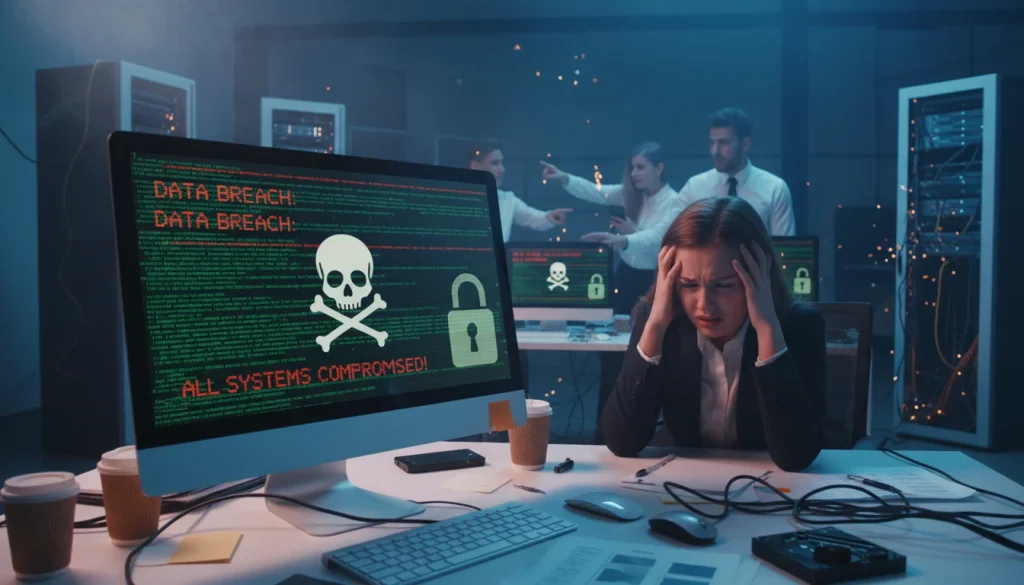
Data breaches occur when malicious actors, often hackers, successfully gain unauthorized access to your digital systems, compromising sensitive information. This illicit access can be achieved through various vectors, including exploiting software vulnerabilities, launching sophisticated phishing attacks to steal credentials, or leveraging weak authentication protocols. The compromised data can encompass a wide range of critical assets, including proprietary customer data and financial records, invaluable intellectual property, personally identifiable information (PII), and sensitive health records.
The repercussions are severe: a sobering statistic from Cybercrime Magazine reveals that 60% of small businesses fail to recover from a data breach attack. This “failure to recover” often manifests as devastating financial losses, irreparable reputational damage, significant legal and regulatory penalties, a profound erosion of customer trust, and prolonged operational disruption. Small businesses are particularly susceptible due to often limited resources and less robust security infrastructures than those of larger enterprises. Therefore, whether you handle highly confidential data, possess valuable proprietary information, or simply aspire to uphold the highest standards of data integrity and trust, recognizing and actively mitigating this pervasive risk is paramount. It requires the implementation of comprehensive, multi-layered cybersecurity measures.
Beyond fundamental safeguards like robust firewalls and advanced encryption for data at rest and in transit, organizations must adopt strategies such as multi-factor authentication (MFA), conduct regular security audits and penetration testing, invest in continuous employee cybersecurity awareness training, deploy advanced intrusion detection and prevention systems (IDS/IPS), enforce stringent access controls, and establish a well-defined incident response plan to effectively manage and recover from any security event.
9. Vendor Fraud
Vendor fraud occurs when a supplier or vendor overcharges for goods or services. They might also deliver substandard products, which can be termed illegal business dealings. Oh, such poor business ethics! You might think. It should raise eyebrows immediately if such a thing were to happen. To avoid this trap, carefully vet vendors and suppliers and establish clear terms and conditions for all transactions.
10. Charity Scams
Scammers may pose as charities soliciting donations from small businesses. Fraudsters in this line of business bank on your emotions and may even portray it as an opportunity to build your brand and give back to the community. It is all a mind game; disengage. Before donating, research more about the charity to ensure it is legitimate and that donations will be used as intended.
11. Government Impersonation Scams
Scammers are not afraid of impersonating government agencies, such as the IRS or Social Security Administration. They will threaten you with fines or legal action if you do not comply with their demands. If any government official is contacting you for any reason, ask relevant questions to verify their identity and report suspicious activity to the authorities. Also, as a proactive measure, ensure you are in the right standing with all government policy requirements, including for all your shareholders or directors. When you have all the relevant documents, you have nothing to worry about from government officials.
Small businesses are prime targets for scams because of their limited resources and capacity. However, by seeking information and implementing robust security measures, you can successfully protect yourself against these fraudulent schemes. Knowledge is power; leverage sites, books, authority sites, and thought leaders to keep up with emerging cybersecurity trends. If you are working hard to grow your business, you should do even more to protect it from external threats. How much you treasure and love your small business is reflected in the efforts you put into keeping it safe!