
Poor time management does more than make a day feel disorganized. Over time, it can affect your productivity, work quality, deadlines, stress, sleep, relationships, and ability to make room for what matters.
This article explains 16 common effects of poor time management, what the available research actually supports, and where to begin if your current system is no longer working.
Decreased Productivity

Time management is a crucial measurement of productivity. The demand for increased productivity has led to the implementation of various techniques such as the Pomodoro, Kanban, Lean Management, Kaizen, Six Sigma, or Total Quality Management (TQM). These techniques are based on the principle that if employees use their time efficiently, they can produce more work in a shorter period.
Disappointing Performance

Since time is a limited resource, its management has a pivotal role in shaping your performance. Various studies show that people who spend their time wisely are more productive and successful than those who don't.[1]Macan, T. H. (1996). Time-management training: Effects on time behaviors, attitudes, and job performance. The Journal of psychology, 130(3), 229-236. … Continue reading[2]Macan, T. H., Shahani, C., Dipboye, R. L., & Phillips, A. P. (1990). College students' time management: Correlations with academic performance and stress. Journal of educational … Continue reading[3]Barling, J., Cheung, D., & Kelloway, E. K. (1996). Time management and achievement striving interact to predict car sales performance. Journal of Applied Psychology, 81(6), 821. People that have poor time management tend to slack off on their responsibilities and refuse to take care of themselves, affecting their work and business performance. If you want to improve your work performance, you need to manage your time well and prioritize tasks based on their importance.
Missing Deadlines

Nothing surprising here - Poor time management can lead to a series of problems with deadlines. For starters, you may have trouble remembering what deadlines you have coming up or when they are due. Not knowing what to prioritize may also lead to missed deadlines. This is not uncommon when time management is not done well and leads to an environment where stress and anxiety reign supreme.
Problematic Relationship and Social Life

How you manage your time affects your social interactions.[4]Guan, J., Tregonning, S., & Keenan, L. (2008). Social interaction and participation: formative evaluation of online CME modules. Journal of Continuing Education in the Health … Continue reading When we are on a busy schedule, it is easy to lose sight of our relationships with others around us. In other words, when we let the day-to-day tasks of life take over our time and energy. Many people spend little time with their loved ones because they are too busy trying to keep up with everything on their to-do list. Or even worse, they do because of their poor ability to manage their time effectively.
life Dissatisfaction

Personal life is greatly affected by poor time management. We feel like we can never get anything done, and there is never enough time in the day. Effective panning our time is essential to ensure we get the most out of it and spend enough time with our family and friends without feeling too tired or stressed. If we don't plan our time wisely, we may end up spending less time with our loved ones and feel like we're missing out on important moments in their lives.
Mental health Problems

Poor time management skills can have a detrimental effect on a person's mental health. Research found that students with poor time management skills, for example, are more likely to have mental health problems.[5]Macan, T. H., Shahani, C., Dipboye, R. L., & Phillips, A. P. (1990). College students' time management: Correlations with academic performance and stress. Journal of Educational Psychology, … Continue reading In this way, they are less able to cope with life's challenges and demands, and their physical and psychological well-being are at risk.
Stress and Anxiety

There are many causes of stress and anxiety. Some of them include mental health disorders and others due to lack of sleep or change in their environment. Whatever the reasons are, they may affect your ability to manage your time effectively. However, the effect is evident when you experience poor time management. It is associated with stress and anxiety.
Sleep Deprivation
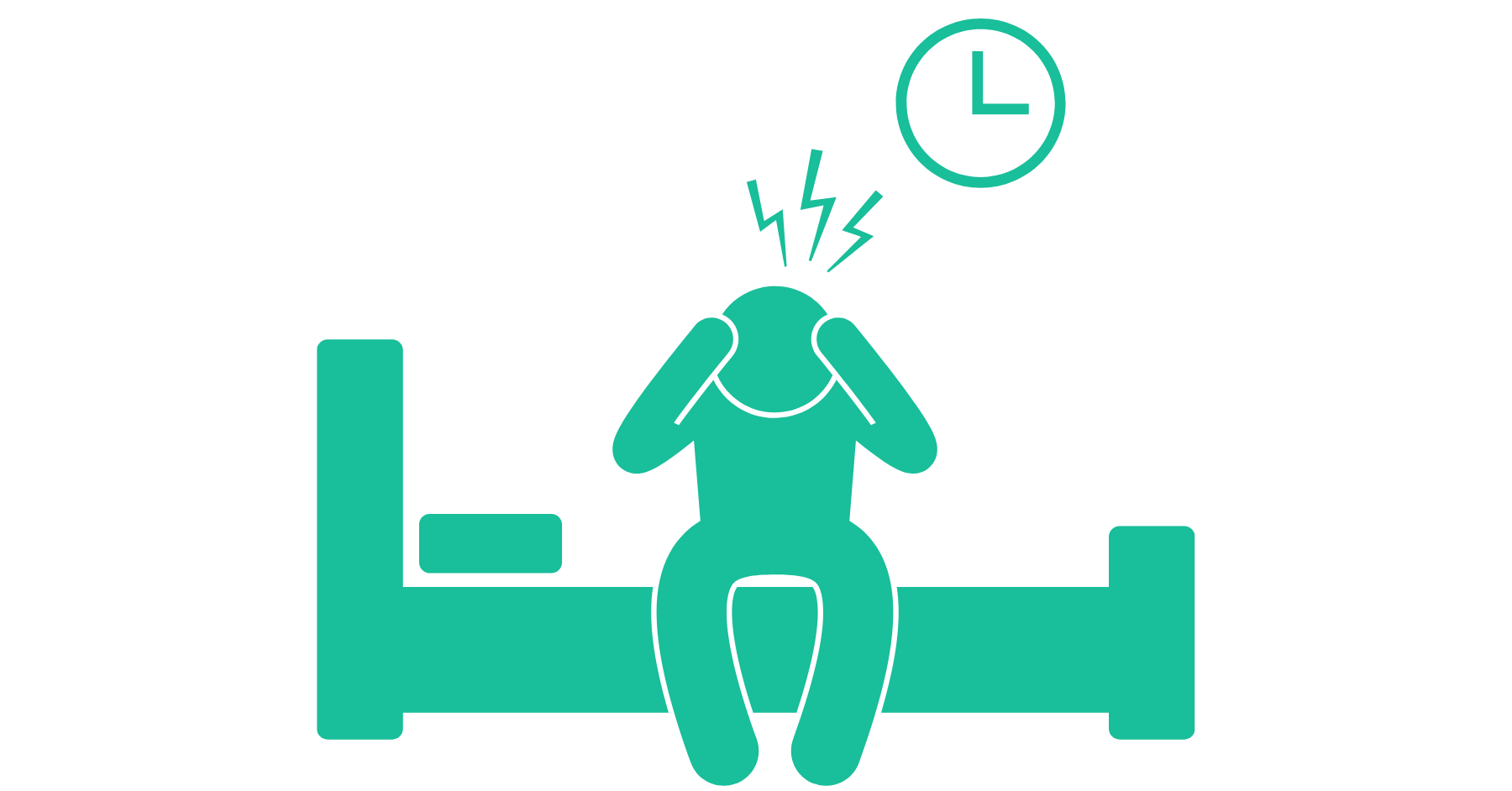
The average adult needs about 7-9 hours of sleep a night. However, many people get less than that, and sometimes far less. Poor time management increases the risk of this problem.[6]Wang, P., & Wang, X. (2018). Effect of Time Management Training on Anxiety, Depression, and Sleep Quality. Iranian journal of public health, 47(12), 1822–1831. … Continue reading It's so hard to get enough sleep when there are so many distractions in the environment and so much on your plate.
Physical Health Issues

Time management plays an essential role in our physical health. Research found that people who manage their time well tend to be more active.[7]Tekin, H. K., & Akil, M. (2020). Effect of Social Problem Solving Skill and Time Management on Physical Activity Level. International Journal of Applied Exercise Physiology, 9(6), 19-25. To live a healthy life, we should learn to balance the time we spend on different activities. And this begins with proper use of time.
Negative Financial Effect

Time is money. If you spend time on money-generating activities, you tend to make more money. Simple as that. Although it may not always be easy to identify those activities, people with good time management behaviors tend to experience positive financial effects.[8]Macan, T. H. (1994). Time management: Test of a process model. Journal of applied psychology, 79(3), 381.
Lack of Self-improvement

'Time management is an important self-improvement skill that we can't improve ourselves by waiting for time to pass us by. Instead, we need to invest our time and make the most of it by using it in a way that helps us reach our goals. Research is clear that a person who has an unbalanced time mode cannot manage lifelong learning and development.[9]Ekaterine, G., & Natalia, K. (2017). Impact of Time Management on Personal Development of Master's Degree Students. European Journal of Social Science Education and Research, 4(6), … Continue reading
Inadequate Time for Creativity and Innovation

Creativity and innovation are the lifeblood of any business. Most people understand that creative minds need time to rest, think, daydream, and come up with ideas.[10]Cai, D. J., Mednick, S. A., Harrison, E. M., Kanady, J. C., & Mednick, S. C. (2009). REM, not incubation, improves creativity by priming associative networks. Proceedings of the National … Continue reading But poor time management tends often causes us to have little time for those activities — a day full of actions, little for creativity and innovation.
Procrastination

Procrastination is a term used for the act of delaying tasks. Many factors can cause it, but one major factor is poor time management.[11]Lay, C. H., & Schouwenburg, H. C. (1993). Trait procrastination, time management. Journal of Social Behavior and personality, 8(4), 647-662. Poor time management leads to unstructured and unplanned work schedules that cause people to not spend time as productively as they should in their important work areas.
Poor Self-discipline

The correlation between self-discipline and time management is clear.[12]Garcia, M. G., & Subia, G. (2019). High school athletes: Their motivation, study habits, self-discipline and academic performance. International Journal of Physical Education, Sports and … Continue reading Poor time management is one of the most common reasons for people to make excuses. For example, they will just order take-out if they come home after a hard day at work and have no energy to cook dinner. Another example is if they don't have enough time to exercise or clean the house, they will say that it's too late already.
Self-discipline is an essential aspect of our life because it helps us control ourselves and our behavior. But with lousy time management, people are less likely to have self-discipline because they are always running short on time.
Constant Work-life Imbalance

Time management is a critical skill that can help modern professionals to achieve a work-life balance. Your ability to manage your time well will allow you to organize your time, prioritize tasks, and plan future work. Poor time management will negatively affect your ability to balance work and life appropriately.
Failure in Career and Business

Poor work quality, failure to deliver, lack of creativity and innovation, and other adverse effects we have discussed of poor time management in this guide all have an enormous impact on your success (or failure) in your career and business.
Poor time management has many negative effects on one's career and business success. Some of these are missing deadlines, procrastination, and stress.
Given these significant negative impacts, addressing poor time management becomes essential for personal and professional well-being. Improving time management skills can reverse many of these effects and lead to enhanced productivity, better relationships, and improved mental and physical health.
Many professionals have found success using visual organizational tools and reminders to stay focused and organized. These range from calendars and task boards to custom challenge coins featuring motivational quotes or team logos. Such tangible prompts serve as daily reinforcement for maintaining good time management habits. Whether through digital apps, physical planners, or motivational items in the workspace, having consistent visual cues can help build the discipline necessary for effective time management.

What to Do When Poor Time Management Starts Affecting Your Life
Recognizing the effects of poor time management is useful, but recognition alone does not change the situation.
When unfinished tasks, missed deadlines, stress, or constant rushing begin to affect your work and personal life, the answer is usually not to squeeze more into the day. It is to make clearer decisions about what deserves your limited time.
Start with these six steps.
1. Capture Your Unfinished Commitments
Write down everything that is competing for your attention:
Tasks you have postponed
Messages that need a response
Deadlines and appointments
Projects you have started but not completed
Personal and family responsibilities
Decisions you have been avoiding
Do not organize the list yet. The first goal is to move unfinished commitments out of your head and into a place where you can examine them.
A vague sense of being behind is difficult to manage. A visible list gives you something concrete to work with.
2. Choose One to Three Outcomes That Matter Most
Not every item deserves equal attention.
Ask:
What has a real deadline?
What would create the greatest consequence if ignored?
What would meaningfully improve my situation?
What can wait without causing serious harm?
Choose no more than one to three important outcomes for the day or week.
This does not mean the remaining tasks disappear. It means you stop allowing a long list of smaller activities to compete equally with the work that matters most.
3. Give Important Work a Real Place on Your Calendar
A task list tells you what needs to be done. It does not tell you when the work will happen or whether it fits into your available time.
Place your priority work into realistic calendar blocks. Give each block a clear outcome rather than a vague label.
Instead of:
Work on presentation
Use:
Draft the presentation opening and slides 1–5
Instead of:
Manage finances
Use:
Review this month’s expenses and identify three unnecessary costs
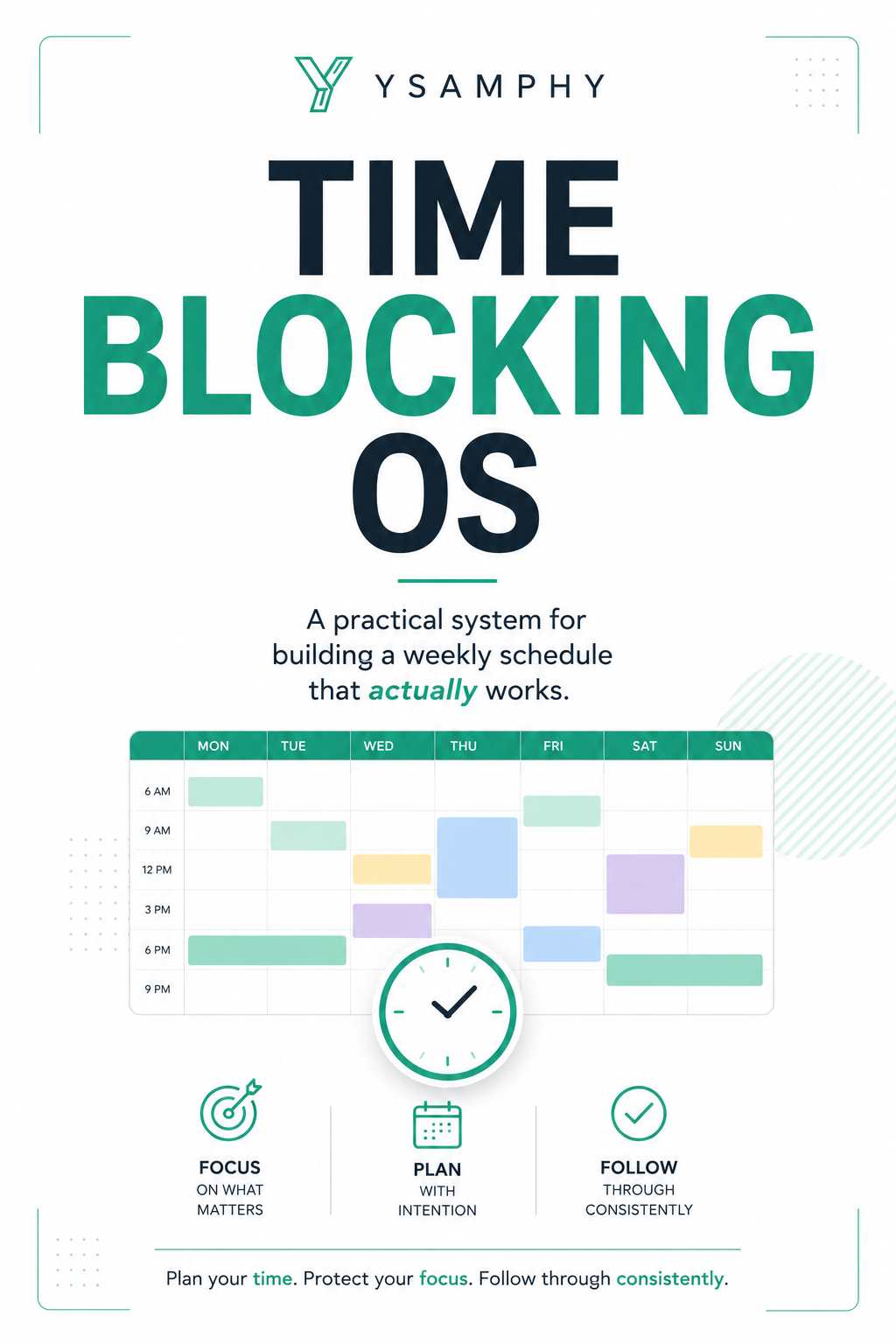
My Ultimate Guide to Time Blocking explains how to turn priorities into a workable daily and weekly schedule.
4. Leave Buffer and Recovery Time
A schedule that uses every available minute is likely to fail.
Tasks take longer than expected. Meetings run over. People interrupt you. Your energy changes.
Leave space for:
Transitions between activities
Unexpected requests
Breaks and meals
Unfinished work
Daily review and rescheduling
Personal and family responsibilities
Buffer time is not wasted time. It is what allows the schedule to survive contact with real life.
Need a practical way to recover?
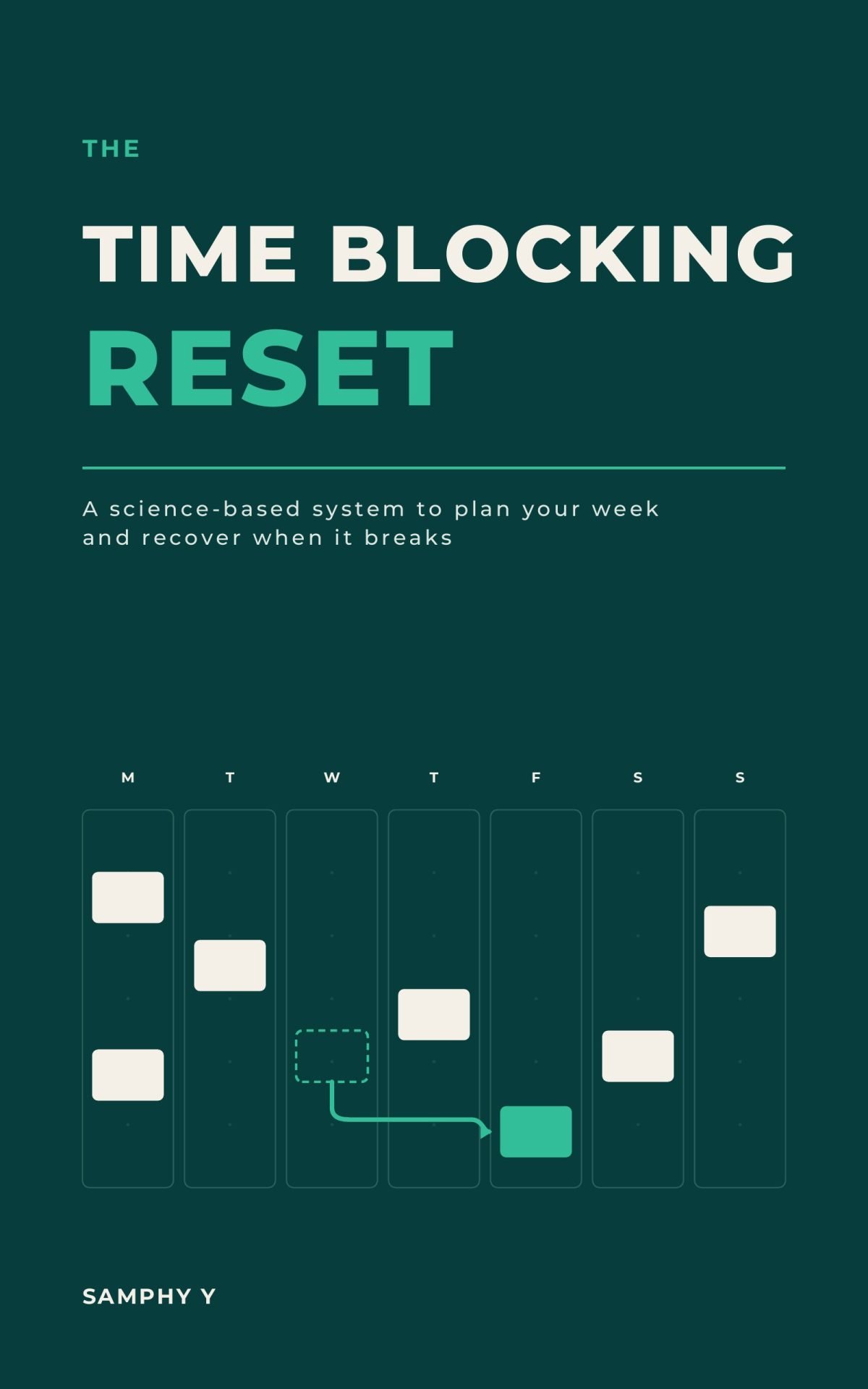
The free 7-Day Time Blocking Reset will help you clear unfinished commitments, rebuild your calendar, and create a realistic return path when your schedule stops working.
5. Review What Repeatedly Gets Delayed
When the same task is postponed several times, do not simply move it again.
Ask why it keeps slipping.
Perhaps:
The task is too vague
The estimate is unrealistic
You are waiting for information
The work is uncomfortable or uncertain
The task is not genuinely important
Your calendar is already full
You need help, feedback, or a decision from someone else
Repeated delay is information.
Use it to improve the system rather than treating it only as a personal failure.
6. Reduce, Delegate, Renegotiate, or Remove What Does Not Fit
Some time-management problems cannot be solved by working faster.
When your commitments exceed your real capacity, something has to change.
You may need to:
Reduce the scope of a task
Delegate part of the work
Renegotiate a deadline
Decline a new request
Postpone optional work
Stop maintaining a low-value commitment
Ask for support
Do not keep stacking new work on top of an already-full schedule.
Every new commitment requires time, attention, or energy that must come from somewhere.
Start With a Reset, Not a Perfect Plan
You do not need to redesign your entire life in one afternoon.
Start by capturing what is unfinished, choosing what matters now, and rebuilding only the next few days.
The goal is not to create a schedule you will follow perfectly. It is to build a system that helps you notice when you are overloaded, make better trade-offs, and return when plans change.
The 7-Day Time Blocking Reset provides a practical step-by-step process for doing that.
You can also explore more guides on planning, focus, recovery, and sustainable productivity in the Better Work hub.
That's it.
Now over to you:
Which do you resonate most? What other effects can you think of?
Similar Articles:


Lack of sleep is very important. This greatly affects productivity. Self-discipline is also very important. I am planning tasks for the week and it works very well for me. I also recommend writing down tasks. If I write down tasks, I always complete them.
Thanks for your comment. You may also want to try a to-do list to organize your tasks and time blocking method to get to work on them.
Hello my dear Samphy, I would like to know when this was published. I can’t find that information and it would help me a lot if you could tell me.
Thanks for asking, Bayron. The article was updated on June 21, 2024.